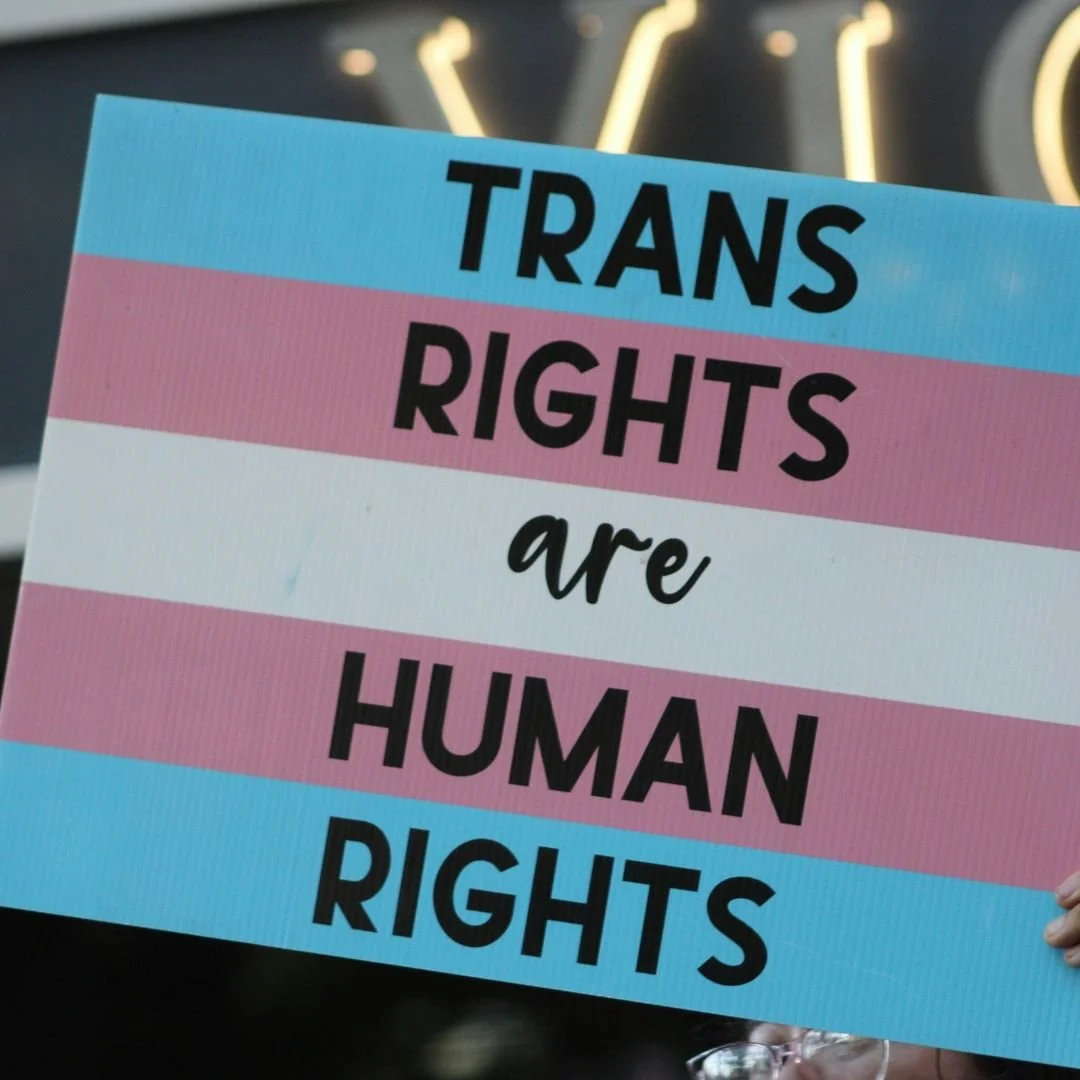
For trans and gender-diverse people raised in high-control faith, gender itself was treated as rebellion. On the harm, the grief and finding safer ground.
A note on who is writing this, because it matters. I am cis. I work with trans and gender-diverse clients, I have done the training, and I care about this a great deal. None of that gives me lived experience of what I am about to describe, and I am not going to write as though it does.
I am writing it anyway because trans survivors of religious harm are badly under-served, and because cis people, cis therapists very much included, are a large part of why. If you are trans and reading this, most of what follows will already be familiar. Some of it might give you words for something you have been carrying without them. If you are cis, read to the end, because the last part is for us.
The Rules Were There Before You Were
High-control religious communities tend to run on complementarianism, which is the teaching that God created men and women for different and fixed roles. Men lead, women submit and support. The arrangement gets described as equal in value and different in function, which sounds tidy until you notice that only one of those functions involves making decisions.
What this produces is a community organised entirely around a gender binary, from the nursery upwards.
Boys go to one group, girls to another.
Modesty teaching lands on girls.
Leadership training lands on boys.
Purity culture assigns each gender a script and polices it relentlessly.
Marriage gets presented as the destination, with a role waiting for you in it.
So the harm starts long before a trans person says anything about themselves. By the time a child notices something is wrong, the community has already issued a complete account of what their body means, what it is for, and what God expects it to do. There is no neutral ground to stand on while you work it out, because the theory covers everything and it was there first.
Confusion, Sin, Demonic, a Phase
When a trans or gender-diverse person does say something, high-control communities generally reach for one of four framings. Each causes a different kind of damage.
Confusion. You do not really know yourself, you are young, or unwell, or deceived, and your own perception of your own life cannot be trusted. This framing hands authority over your interior to someone else and keeps it there.
Sin. Your gender is a moral failing requiring repentance. This attaches shame directly to existing, and it makes every day you continue to be yourself another day of deliberate wrongdoing.
Demonic. Something has got into you and needs casting out. People who went through deliverance ministry describe hands on them, prayers over them, a room full of people addressing something they had decided was not you. It is a deeply frightening thing to be on the receiving end of, particularly as a young person.
A phase. The gentlest sounding and still corrosive. Wait it out and do not do anything permanent. This one often comes from people who love you and are hoping, which makes it harder to push back against.
All four of these count as conversion practices when they involve sustained effort to change or suppress gender identity. Gender-focused conversion practices get recognised far less often than sexuality-focused ones, including by survivors themselves, and including by therapists.
Losing All of It at Once
In most people's lives, family, faith, friendship and community are at least partly separate. Something can go wrong in one without taking the others down. Inside a high-control religious community, those categories collapse into one group of people.
Your parents are in the church, your friends are in the church. Your social calendar, your sense of purpose, often your workplace or your school, all in the church. So coming out does not cost one relationship. It can cost every relationship simultaneously, in the same week, from the same source.
For some people it costs more than that. Housing, if you are young and living at home. Employment, if you worked for a religious organisation. School, if you attended a religious one. Financial support partway through a degree. These are not rare outcomes and they are not accidents, because the threat of exactly this is how these communities hold people.
There is also the loss of an imagined future. You had a picture of how your life would go, and everyone in it was from the same place. Weddings you would attend, people who would turn up when something went wrong, a version of growing old surrounded by familiar faces. Coming out removes the future along with the present, and people rarely get much space to grieve that part.
Why 20 November Sits So Close
Trans Day of Remembrance falls on 20 November each year. It began in 1999, started by Gwendolyn Ann Smith to honour Rita Hester, a Black trans woman killed in Massachusetts the year before. The day is built around reading names aloud, and the list is always longer than anyone wants it to be. Trans women of colour are grossly over-represented on it.
For trans people carrying religious trauma, this day can land with particular weight. The teaching that trans people are deceived, disordered or possessed does not stay inside church walls. It shapes public argument, votes, policy and the general level of safety trans people can expect walking around. There is a line between the theology and the conditions, even though no individual sermon causes any individual death.
Survivors often sit with a specific and awful knowledge on this day, which is that the people who raised them would likely have had something to say about the names on that list, and it would not have been grief.
There is personal loss too with people known and lost. People who left communities and did not find anything to land in. The day holds all of that at once, and it does not resolve into anything comforting by the evening.
If 20 November is hard for you, you are allowed to do very little with it.
Finding Ground That Holds
Support after this kind of harm takes a few different shapes, and the right combination is unique to the individual.
Affirming therapy matters most where it is genuinely affirming rather than merely polite. It is entirely reasonable to interview a prospective therapist. Ask what affirming means in their practice. Ask whether they have worked with religious trauma specifically, because plenty of otherwise good gender-affirming clinicians have no framework for the faith side, and plenty of religious trauma specialists have never examined their own assumptions about gender. You need someone who can hold both without asking you to teach them.
Trans-led peer community does something therapy cannot, which is remove the explaining. Being somewhere nobody needs the background filled in is its own form of rest.
Affirming faith communities exist, and for some people they are the thing that makes recovery possible. Progressive congregations with trans clergy and genuine theology behind their welcome are real and findable. For other people, the suggestion lands badly, and that reaction is understandable and should be met with respect rather than gentle correction. Wanting nothing further to do with religion is a complete and reasonable position. Nobody is obliged to rebuild a relationship with faith to prove they have recovered, and anyone implying otherwise is serving their own comfort.
Some people land somewhere undefined, keeping a private spirituality without any institution attached.
The point is choosing, after a long time of not being allowed to.
Some Places To Start:
QLife offers free, anonymous LGBTIQ+ peer support and referral by phone and webchat, 3pm to midnight daily. Call 1800 184 527 or chat at qlife.org.au.
TransHub (ACON) holds practical information on health, legal processes and services for trans and gender-diverse people, at transhub.org.au.
Lifeline is available 24 hours on 13 11 14.
Religious Trauma and Cults (RTC) holds a registry of practitioners trained in religious trauma and spiritual abuse.
For the Cis People Reading
Let's be pretty blunt here.
Trans people did not create this problem and they are not responsible for fixing it.
The theology causing this harm came from cis-dominated institutions.
The gaps in clinical training are cis clinicians' gaps.
The families refusing to adjust are mostly cis families.
For those who are a therapist, get properly trained rather than relying on trans clients to educate you mid-session while paying for the privilege. If you work in a faith community, you already know whether its position on this is defensible, and whether you have said so out loud. If you have trans people in your family, your discomfort is yours to manage privately and not something they should have to accommodate.
On 20 November, the useful move is not feeling moved. Attend the vigil if you are welcome there, and then do something in the other 364 days that makes the list shorter.
If you are trans and you came out of one of these communities: nothing about you was ever the test. The body you were told to doubt has carried you through all of it, including the parts nobody around you understood. You are allowed to grieve what that cost, for as long as it takes, and you are allowed to want more than survival.
Connect
Connect with me on Instagram – @anchoredcounsellingservices
For therapy use this contact form.
Read more from me over on Substack - The Post Church Files
Connect in with Religious Trauma & Cults